Moon Phases and Gardening: When to Plant, Prune, and Harvest
April 13, 2026 · 9 min read · TriMoon.world
 AI-generated. Written by a model and not reviewed by a person.
Get the Lunar Calendar's daily guidance free for 7 days, then $5 / mo — cancel anytime.
Start your free 7-day trial →
Lunar gardening is one of the oldest agricultural traditions in the world, practiced by farmers from ancient Egypt to modern biodynamic vineyards. Far from being mere folklore, the practice rests on a coherent framework that matches plant activity to the rising and falling rhythm of moonlight. Here is how to use it in your own garden.
The Ancient Roots of Lunar Gardening
Long before scientific agriculture, farmers across virtually every continent timed their planting and harvesting by the Moon. Roman writers like Varro and Pliny the Elder described detailed lunar gardening rules. Indigenous peoples in the Americas tracked planting cycles by the Moon. European peasants passed lunar gardening lore from one generation to the next for centuries, and many of those rules survived into modern almanacs and farming calendars.
What all these traditions share is a simple observation: plants seem to respond to the Moon. The reasoning, even before modern science, was practical — moonlight intensity changes measurably across the cycle, gravitational pull affects fluid movement (both in oceans and, plausibly, within plants), and the rhythmic predictability of the cycle gave farmers a reliable timing tool.
Modern research has lent partial support to these traditions. Growers who follow biodynamic methods report effects of lunar phase on germination, root development, and even the storage life of certain crops. While the scientific picture is still incomplete, gardeners who try lunar timing often report better results — and the practice itself encourages closer attention to the natural rhythms of the garden, which is a benefit in its own right.
This post translates the lunar gardening tradition into a practical, modern framework. You don't need to believe in any particular metaphysics for it to work. You just need a calendar, a willingness to plan a few weeks ahead, and the curiosity to test it in your own beds.
Gardening by the Four Quarters
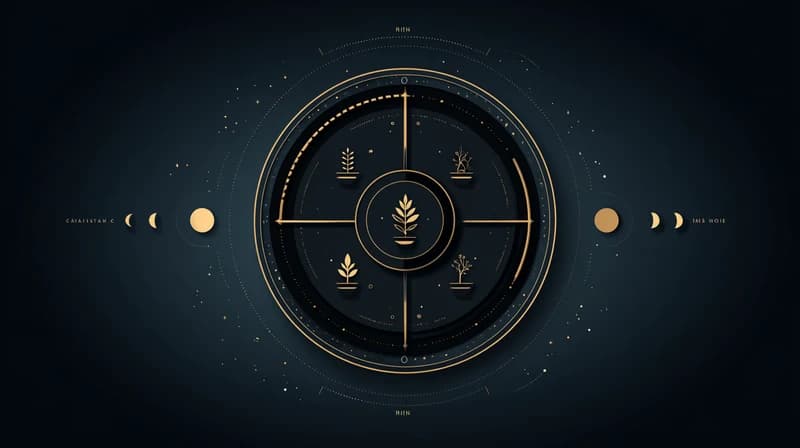
The traditional lunar gardening framework divides the cycle into four quarters, each corresponding to roughly seven days. Each quarter favors specific types of garden work.
First Quarter (New Moon to First Quarter): This is the cycle's youngest, most generative phase. Gravitational pull is high and moonlight is increasing, which traditionally favors the planting of leafy crops that produce above ground and have their seeds outside the fruit — lettuce, spinach, cabbage, broccoli, celery, and other leafy greens. Sap is rising, energy is moving upward, and seedlings tend to establish quickly.
Second Quarter (First Quarter to Full Moon): Moonlight is at its strongest in this quarter. Plants that produce fruit with seeds inside — tomatoes, peppers, beans, peas, squash, melons, cucumbers — do best when planted here. The strong light supports vigorous above-ground growth and flowering. Most flower seeds also do well in this quarter.
Third Quarter (Full Moon to Last Quarter): Moonlight begins to decrease, and energy shifts downward. This is the traditional time for planting root crops — carrots, beets, potatoes, onions, garlic, radishes — and bulbs that need to develop strong root systems. It's also a favored time for planting perennials, fruit trees, and shrubs that need to develop deep, lasting root structures.
Fourth Quarter (Last Quarter to New Moon): This is the cycle's quietest phase, traditionally avoided for most planting. Energy is at its lowest and moonlight is fading. Use this quarter for soil preparation, weeding, mulching, harvesting crops you intend to store, and pruning trees and shrubs you want to slow down.
What to Plant in Each Phase
Beyond the four-quarter framework, here is a more specific planting guide. These are traditional rules with broad agreement across multiple agricultural traditions.
Days 1-7 after the New Moon — Above-ground leafy crops: Plant seeds for lettuce, spinach, kale, chard, cabbage, cauliflower, broccoli, brussels sprouts, celery, parsley, and leafy herbs. The waxing crescent through first quarter window is ideal for these because the rising lunar energy supports rapid above-ground growth. Many gardeners find that lettuce planted in this window germinates faster and is less prone to bolting.
Days 8-14 — Above-ground fruiting crops: Plant tomatoes, peppers, eggplants, beans, peas, cucumbers, squash, pumpkins, melons, and corn. The peak moonlight of this window supports strong stems, abundant flowering, and good fruit set. For tomatoes especially, traditional gardeners insist on planting within a few days before the Full Moon for best results.
Days 15-22 — Root crops and perennials: Plant carrots, beets, parsnips, potatoes, sweet potatoes, onions, garlic, radishes, turnips, rutabagas, and any bulbs intended for the following year. Also plant fruit trees, berry bushes, and perennial flowers in this window. The waning lunar energy directs growth downward into root systems, which is exactly what these crops need.
Days 23-29 — Rest and preparation: Avoid major planting in this window. Use the time for amending soil, building compost, weeding, mulching, and planning the next cycle. Some gardeners use this window to harvest herbs intended for drying, since they tend to dry better and retain potency when picked during the waning Moon.

Pruning, Weeding, and Maintenance Timing
Lunar timing isn't only about planting. The cycle has equally important guidance for the maintenance work that keeps a garden productive.
Pruning has a clear traditional rule: prune during the waning Moon (third and fourth quarters) to slow regrowth, and prune during the waxing Moon (first and second quarters) to encourage vigorous regrowth. So if you want a fruit tree to produce more, prune it in the waxing phase. If you want to control the size of a hedge or remove an unwanted branch without triggering rapid regrowth, prune during the waning phase.
Weeding is most effective during the waning Moon, particularly in the fourth quarter. Weeds pulled in this window are less likely to regrow from any remaining root fragments. The same logic applies to removing diseased plants you want to eliminate completely.
Watering has subtler timing considerations. Many lunar gardeners report that plants are most receptive to watering and feeding during the first and second quarters, when sap is rising. Watering during the waning phase is still beneficial, but a heavier watering schedule during the waxing phase can support better growth.
Transplanting seedlings is best done during the second quarter (waxing gibbous), when growth energy is strongest but moonlight is not yet at full peak. Transplanting in the third quarter is also acceptable, particularly for crops that need to develop strong roots.
Composting and soil amendment belong to the fourth quarter. The quiet energy of this window matches the slow, decomposing work of building good soil. Many traditional gardeners turn compost piles only during the waning Moon.
Harvesting and Storage by Moon Phase
The lunar cycle affects not just how plants grow, but how well they store after harvest. This is one of the areas where traditional rules align most closely with modern observations.
For long-term storage: Harvest during the waning Moon, ideally in the third or fourth quarter. Crops harvested in this window contain less moisture in their tissues, which means they're less prone to mold, rot, and storage damage. Onions, garlic, potatoes, and winter squash all benefit notably from waning-Moon harvest.
For immediate use or fresh eating: Harvest during the waxing Moon, particularly in the second quarter approaching the Full Moon. Crops in this window contain peak moisture and sugar levels, making them more flavorful, juicier, and visually vibrant. Salad greens, fresh herbs, and tomatoes intended for immediate cooking are best picked here.
For drying or preserving: Harvest in the waning Moon, especially the third quarter. Lower moisture content means better drying and a reduced risk of spoilage. Herbs intended for drying — lavender, sage, thyme, oregano — should ideally be cut in this window, on a dry morning after the dew has lifted.
For seed saving: Wait for the fourth quarter, when the plant has had time to fully mature its seeds. Seeds saved during this window often show improved germination rates the following year.
For cut flowers: The waxing Moon, particularly the second quarter, produces the most vibrant and longest-lasting cut flowers. Cut early in the morning, when the stems are full of moisture and the petals are at peak color.

Building Your Lunar Garden Calendar
The easiest way to integrate lunar gardening into your practice is to build a simple seasonal calendar that overlays the Moon's cycle onto your typical garden tasks.
Start with the basic outline. Mark every New Moon and Full Moon for the upcoming season. Then identify the two weeks following each New Moon as your primary planting windows. Note which crops you intend to plant in which window, based on the framework in this post.
For existing beds, schedule weeding for the fourth quarter of each cycle and pruning according to your goals — waxing for vigorous regrowth, waning to slow it down. Plan major harvests around the appropriate phase: long-term storage in the waning Moon, fresh eating in the waxing Moon.
Keep a brief journal of what you plant in each window and how it performs. After two or three growing seasons, you'll have your own data — your own evidence of what works in your specific climate, soil, and microclimate. Lunar gardening is a tradition that rewards patience and observation more than blind faith.
The TriMoon Lunar Calendar can simplify this enormously. Instead of consulting an almanac and tracking phases by hand, you can see at a glance which lunar quarter you're in, which planting windows are open in the coming weeks, and when the next New Moon will arrive. For a serious gardener, having precise lunar data integrated with your garden planning saves time and improves accuracy.
Whether you find yourself convinced of the underlying mechanism or simply enjoy the rhythm it brings to your gardening practice, lunar timing offers something rare in modern agriculture: a slow, deliberate way of working with nature's clock rather than against it. Your tomatoes won't thank you in words, but the harvest just might.
This article was written by AI and has not been reviewed by a person. The astronomy behind it is TriMoon's own precise ephemeris data — not generic horoscopes.